Monday, 30 January 2012

Daffodils. - William Wordsworth

Today I started my Romanticism course which concentrates mainly around poetry in that period, and I have to say I enjoyed it immensely. In the seminar we focused on the first verse of William Wordsworth's poem well-known poem, Daffodils; otherwise known as I Wandered Lonely As A Cloud which was fascinating, and which I feel I grasped rather well.

I wandered lonely as a cloud
That floats on high o'er vales and hills,
When all at once I saw a crowd,
A host of golden daffodils;
Beside the lake, beneath the trees,
Fluttering and dancing in the breeze.

One of the nation's favourite and most-recognised poems, Daffodils is a poem which typifies the poetry of the Romantic movement. From the very first nuance, 'I' suggests that Wordsworth is following closely the themes of individualism and the self that were clear in poetry of this era, when writing this poem. The first line appears to me a declaration of the isolation and independence. He wanders, 'lonely', like a 'cloud' - an insubstantial, ethereal image - that 'floats on high', creating an image that has multiple layers.

As well as the theme of individualism here, we can also note how Wordsworth is playing on the idea of transcendence; of being above others. One of the main ideals of the Romantic movement, was the idea of creative artistic thought taking the place of a God, and here it seems evident that Wordsworth in writing this poem, has transcended imagination above all. Wordsworth's use of the word 'floats' seems to evoke the mythical, prophetic poetry of his contemporary William Blake.

The next line, 'When all at once', parallels his idea that poetry is 'a powerful overflow of spontaneous emotion'; Wordsworth the proponent of spontaneity, over the 'reason' championed by the eighteenth-century poets before him. The idea of a 'crowd' once more opens up the theme of individualism; this time the narrative has switched from inward self-reflection, to the idea of another perspective looking back at him.

'A host' is a phrase used that we can read a lot into, as Wordsworth once more opens up the idea of a sense of the self displaying itself to others: it seems the author here considers himself hosting a spectacle to those who read his poems. There is, however, an inclination that the daffodils represent an opening to the author himself as if they are the hosts; an invitation to Wordsworth to explore the natural beauty of the world. Once again the 'golden' image that is thrown up indicates wealth and a richness; vivid imagery for sure.

The final couplet of Wordsworth's first verse, allows him to explore nature; a theme that was ever-present in poetry from the Romantic era. The speed of the poem switches here, speeding up and perhaps indicating the flow of ideas and the change of thought that Wordsworth is trying to bring about, in contrast to the ideas of Enlightenment in the eighteenth-century. The 'fluttering' and the 'dancing' in the 'breeze' act as a further lightness in the images, paralleling with those of 'wandered' and 'floats' used earlier in the poem.


Evidently, then, Wordsworth's poem acts as a celebration of the beauty of nature, and a reconciliation between a man and the environment. The poem is emotionally song, light-hearted, and the use of personification leaves us with clear, vivid images in the readers' minds. All in all it's no wonder that the poetry of Wordsworth is pivotal in the Romantic movement, and that so many people still recognise and love 'Daffodils' even to this day.

Sunday, 29 January 2012

Australian Open Final: Novak Djokovic v Rafael Nadal

The final battle of the Australian Open came once again down to the best two players in the world; Rafael Nadal aiming to stop the world number one, Novak Djokovic, in his run of twenty wins in Grand Slam events. With both players taking part in long physical semi-finals, Djokovic coming through in five sets against Murray just forty hours ago, both players knew it would take a battle of immense endurance and physical strength to come through victorious at the Rod Laver Arena.

In a gruelling first set of an hour and twenty minutes, both players played tremendous tennis; ruthless and ferocious in their efforts to take the first advantage, knowing the importance of an early lead. Both players held their serves, battling through twenty and thirty-shot rallies with a wonderful display of skill. Then, at 5 games apiece, a breakthrough: Nadal battling to break at last, Djokovic’s serve. Holding his own in the final game of the set, Nadal served it out, and in an incredible eighty-two minutes of sensational tennis, he had the all-important first set and a 1-0 lead.

Ever the Champion though, as the second set rolled around Novak Djokovic showed why he is best player in the world. At 1-1, Djokovic began to take control as his tennis really started to click into gear. Three games on the bounce from Djokovic, and suddenly, without warning, the momentum has switched: the world number looks at ease on the court. Tennis can change in an instance, though, and just when you think Djokovic is about to level the match, serving for the set he fails to convert his two set points, and Nadal breaks him right back. It seems there’s life still in the set yet for the Spaniard, at 5-4, but to the dismay of his coaching team watching from the stands, he can’t hold his serve, and the Serbian wins the set 6-4 to level the match at 1-1.


With the crowd loving every minute, the third set blistered into life with a lightning display of tennis, but this time from just one of the two men slugging it out on court: Novak Djokovic. In a tremendous display of exhibition tennis, the Serbian hit winner after winner across court, beginning to establish his dominance. Nadal looking dejected, the wind taken out of his sails, Djokovic rattled off a wonderful set 6-2, to give himself a 2-1 set lead, and leave himself one set away from his third Australian Open title. Could the Spaniard fight his way back into the game?

In the fourth set the crowd seemed to get behind the world number two, Nadal, wishing wholeheartedly for the match to go the distance into a deciding set. The Serbian on the other hand, seemed to have other ideas, holding his serve with ease for the early part of the set, while forcing Nadal to battle to hold his own. Nadal, always a fantastic competitor, attempted to whip up the action into a Spanish frenzy, fist-pumping and leaping into the air, trying to establish himself in the game, and break Djokovic’s serve. 4-3 in the lead, and at the most crucial part of the set, Djokovic turned on the style with a fantastic three points to lead 40-00.

Intense, and staring down the barrel, Nadal incredibly won the next two points to leave Novak with just one break point. Sensationally, he couldn’t take it, and Nadal had fought his way back to 40-40. Two points later, as the heavens began to open, Nadal had against all odds levelled the match, with an incredible fight back. With the fourth set tied at 4-4, and the game-time coming around to four hours, another twist in the tale, the rain had become too much: the game must be stopped. An agonising fifteen minutes wait for both players as the roof comes across; the game still hanging right in the balance.

With rapturous applause the two warriors returned, with Djokovic looking to wrap this up, and Nadal looking to take it the very distance – the crowd with him all the way. The combatants traded blow for blow, sublime tennis producing cheers from the crowd that shook the foundations of the Rod Laver Arena. It seemed inevitable: a fourth set tie-breaker would be required to decide in what direction this match would go.


Once more the two locked swords: smashing impossible shots and hitting returns to produce lengthy rallies that in an ordinary match would have been over many shots earlier. The advantage had been on Djokovic to wrap this game up in the fourth but it wasn’t to be; Nadal battled furiously to win the tie-break 7-5, and the crowd had been rewarded: a fifth and final set would be needed to separate the two warriors.

With the games locked at 2-2 in the fifth, history had been made. These two had officially racked up the longest grand slam final in history, just moving past the five hour mark. Sensationally, both players lifted themselves for one final effort; as they matched each other serve for serve. In the sixth game, a switch of momentum in the air as Djokovic begins to tire; a break point for Nadal and he takes it to lead 4-2. Just two short games away from victory, but as always tennis can change in just a blink of an eye.


The numbers are just phenomenal, and no wonder Djokovic is tired and looks beaten. That’s ten hours of tennis in his semi-final and final combined, whereas his first five matches took ten hours and fifteen minutes combined. Compelling stuff, made even more so by Djokovic breaking straight back. That’s 4-4, and for a moment the two trade service games once more; 5-5. Who would break first? A battle of will and endurance: a battle of the mind. The crowd have begun to forget their alliances now; they cheer every point, and if it was only possible to crown both players the winner, I’m sure everyone would agree to do so.

Both players dig deep for one last momentous effort, but for one player the strain is just too much. Djokovic believes; he strikes for the killer blow to see off the Spaniard in front of him, and with some incredible play finds the break. He leads 6-5, and serves for the match and the tournament. For Nadal once again it isn’t to be; Djokovic collapses to the ground and the cheers and applause reverberates all around the stadium. Not just for the Serbian, but for Nadal too; both players producing a spectacle that has to be listed up there with the best of the finals there has ever been.


Saturday, 28 January 2012

Legacy of Blood. - Alex Connor

Synopsis: London, 1732. William Hogarth is called to a murder scene. A woman lies dead, her unborn child ripped from her body. It is a warning. Hogarth painted the future King leaving her bed. He must destroy the painting to survive. But her killers made one mistake. They left the Prince's son alive. Centuries later, one man holds proof of this line of succession and keeps a watchful eye on the Prince's heir. The legacy is a terrible burden, but also an incredible opportunity. During a flight in a private jet, when a fellow passenger speaks of having gained possession of proof of this, the Royal Family's darkest secret, everything changes. Within hours of the flight, three of the seven passengers have been silenced. Who killed them? Why? To keep the secret or expose it? Where is the proof?

Review

After thoroughly enjoying Alex Connor’s The Rembrandt Secret in March of last year, I felt a sense of eager anticipation when turning over the first page to her latest offering, Legacy of Blood. I definitely wasn’t disappointed. Once more Connor delves deep into the murky, murderous depths of the art world, this time emerging with a sensational secret which threatens the very monarchy itself.

A fateful journey on a private jet: the mad whisperings of an art dealer confused and in a mind-state far from calm. One sudden foolish mistake: with dreadful and potentially devastating consequences. The confirmation of the existence of a William Hogarth painting believed to be lost – but who heard Bernie Freeland’s spluttered out secret? Three art dealers, ruthless and manipulating in a world that takes no prisoners; three call girls who have information at their fingertips, and a madam that has contacts in high places. The secret is huge, and people are prepared to commit unspeakable deeds to have the painting for their own. The Russians, the Chinese, and those in the English hierarchy that know the painting must remain safe at all costs.

What impressed me the most about Legacy of Blood was the delightful way in which the author weaves a complex, intricate web of characters; each with their own stories and secrets, each with their own motives, but whose paths, and in some cases pasts, are closely interwoven. As a result, the reader is pulled cleverly from side to side, thoughts racing in an attempt to get the measure of each of the characters involved, the list of possible culprits seemingly endless. It seems impossible to know who to trust and who to be wary of, as Connor keeps us guessing; we flick through the pages, captured like a fly to a spider’s web as we struggle to penetrate a world which holds many secrets, to find our answers. On she weaves, as the plot twists and turns right to the very last page.

In a sense, the dénouement is one which has multiple layers; the answers are never so simple in the elusive and secretive art world. It is unclear how the tale will unravel, because each character has separate ideas about the painting and its importance. Someone is committing murders, ruthless and gruesome; another, dying himself of a terrible illness, knows he must keep the painting safe to insure the future of his family when he is gone. A recently disgraced man, fallen from the art world, takes up an investigation more dangerous than he realises; dreaming of the painting that can restore him to prominence in the art world once more. A mother weeps as her son lies dying in a coma, the fateful overdose coming just hours after stepping off Bernie Freeland's private jet.

Legacy of Blood is a story of greed, ruthlessness, murder and deceit. In the race to own the painting that causes such scheming and lies, who will emerge victorious? Will good prevail over those who intend evil, and will a secret that has remained buried for centuries emerge to befall the government itself? Read Alex Connor’s fantastic new thriller for a rip-roaring, action-packed tale that will make your jaw drop and your fingers itch with excitement as you turn the pages.

5/5.

Bad Blogger!

It's been six months or thereabouts since I last looked at this blog. Six whole months. Why is that? I guess I could make the typical excuse of life moving on and getting in the way, and although to some extent that is true, I know that if I would have really wanted to make the effort, it wouldn't have been too difficult to get on here and write a post occasionally. I have, however, once more decided to start writing posts on here again. Call it a belated New Year's resolution, or something.

In September I started university and it's certainly been an experience. New people, new sights, new city; a new life. I'm glad I took the opportunity to move to a different city, and to go to university, as I'm sure it's going to be a life-changing experience; already I see that for me it's a part of growing up, and trying to find myself as a person. In a sense, although I really went to university to further my studies, it's like my life is really beginning here.

As for my studies, on Monday I begin my second semester of my first year. Last semester went reasonably well, but not quite as well as I would have liked. I struggled at first to get used to the style expected in assignments, accustomed instead to the essay-writing at a-level standard. However, as the weeks went by my marks improved, and I soon hope to have my exam results back also. I know already that most of my modules have been passed, so I'm not too worried about the outcome of the exams.

As the new semester rolls around, my modules for the year are; Romanticism, which looks at poets such as Keats, Byron, Blake, Wordsworth and Coleridge; Shakespeare, a module that I'm excited to get started on because I've always wanted to read more of his works; Crime Fiction, which will include the Sherlock Holmes mysteries, along with the writings of Agatha Christie; and lastly Bildungsroman, where I will get to read the works of Dickens and Charlotte Bronté, just to name a couple. Evidently, I have an interesting semester ahead of me.

In general then, as I aim to get the blog up and running again, I will once more be focusing my posts on my general interest in music, sport and literature. I shall be aiming to diversify my taste in both my reading and in my album-listening habits, taking albums from the lists on the 1001 Series site as well, as I go. So without further ado, this brings my long absence to a close, and let's see if I can finally commit to posting regularly once again.

Ben.

Tuesday, 9 August 2011

Riots, Rage & Ruin.

I wanted to pause for a second and take a time out from my regular posts, to reflect and offer my ruminations instead on something that is more important: the horrific unrest and riots that have taken place principally in London, but which are spreading across the country even as I type.

Quite frankly, it is disgusting to sit and watch thousands of people loot, burn buildings, and fight with police, destroying everything that they see fit, without a semblance of care or remorse for their actions. People's homes are being destroyed, along with their businesses; even their very livelihoods. Yet it continues, as more and more people join in with what can only be described as mob mentality. It's sickening to see the true capabilities of human nature; the very violence, unrest and turmoil that Great Britain has become embroiled in.

Fire rages through the Carpetright store on Tottenham High Road

I may be young and naive, but even I can recognise that these people are deluded. They may convince themselves that their is drive to their actions, talk themselves into fighting. They may complain that they are making their voices heard by making a stand; but this is surely not the way to do it.

Alas, the media make things no better. The images of buildings in flames, of smashed glass and of fighting littering the streets, are one's that you would expect. Does this mean they make the situation better? No. It's obvious that they must inform the public of events, but although it will fill most viewers with bitterness and resentment for those that are causing the problems, it also riles the spirits of those that want to get involved for no reason. As such, the riots have transpired into something out of control; a complete civil unrest.

A police car burns in the night

In just two days the situation has become more frightening than anyone could have possibly imagined; a realisation that within such a short period of time, a completely manic attitude has swept the country. I pray for the families and the people that have lost their businesses and homes over attitudes and actions so preposterous, pathetic and unnecessary that it makes my blood boil, as I'm sure it does many others.

I guess all we can do now is wait and hope that our country has enough good to calm the situation and bring it to peace before this can be allowed to continue onwards and spread even further. It needs to be stopped.

Wednesday, 3 August 2011

The Interpretation of Murder. - Jed Rubenfeld

Synopsis: Manhattan, 1909. On the morning after Sigmund Freud arrives in New York on his first - and only - visit to the United States, a stunning débutante is found bound and struggled in her penthouse apartment, high above Broadway. The following night, another beautiful heiress, Nora Acton, is discovered tired to a chandelier in her parents' home, viciously wounded and unable to speak or to recall her ordeal. Soon Freud and his American disciple Stratham Younger, are enlisted to help Miss Acton recover her memory, and to piece together the killer's identity. It is a riddle that will test their skills to the limit, and lead them on a thrilling journey - into the darkest places of the city, and of the human mind.


Review


Well, where on earth do I start with this one? I picked this up on the recommendation of several members on a forum I regularly frequent, and I certainly haven't been disappointed; The Interpretation of Murder is a captivating novel filled with love, deception and murder. Sigmund Freud's only ever trip to the United States is one that has always confused biographers, as for the rest of his life he referred to American's as 'savages.' What happened to the genius on his travels? Rubenfeld in this novel delightfully weaves the threads of history and fiction together, to create us a clever answer.

From the moment that Freud steps down in the United States with his two companions Carl Jung and Sandor Ferenczi, to deliver a series of lectures at a prestigious university, in the hope his psychoanalytical ideas will propel across the country, mysterious forces work against him to stop him doing so. As Freud battles to dispel the rumours that threaten his work and his credibility, his disciple Dr Stratham Younger, has other problems. A stunning débutante is found whipped and bound in her home, with no recollection of the event, or no voice. Miss Acton must work with Younger to unravel the mystery of her lost voice, and as she does so, Stratham begins to realise that not everything is quite as it seems.

The Interpretation of Murder is a novel which is fiendishly clever, as the reader's suspicions are led one way, then another. The author creates a tension through all his characters; as accusations fly between them, we no longer know who to trust. It seems everyone has a secret to hide, as the plot unravels and the reader turns the pages in anticipation.

In addition, the novel tackles brilliantly, the way in which Sigmund Freud transformed our ideas of psychology and of the mind. As an A Level psychology student who has studied Freud, I found this to be enlightening in the way in which some of his techniques and ideas were explored and analysed. Of course, not everyone agrees with the great man's ideas; and as the divisions and cracks within Freud's personal camp begun to show throughout the novel, maybe the answers are closer than the psychoanalysts believe.

All in all a fantastic, engaging novel that holds the reader in suspense and anticipation, trying to second-guess Rubenfeld's plot twists and turns. It is a tribute to the way in which the book is written to know that when the reader feels like they have stumbled upon the answer, they must not be so sure, as the rug is swept from under our feet once more. Allow yourself to be taken on a journey into the darkest depths of New York city, and into the human mind.

5/5.

Friday, 15 July 2011

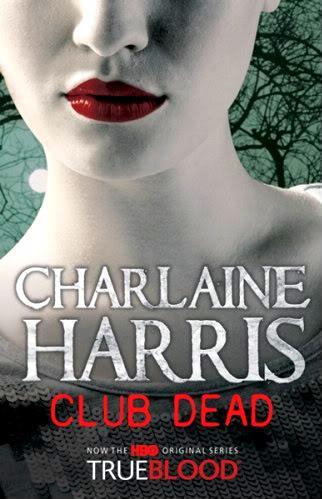
Club Dead. - Charlaine Harris

Synopsis: There's only one vampire Sookie Stackhouse is involved with - at least voluntarily - and that's Bill. But recently he's been a little distant - in another state distant. His sinister and sexy boss Eric has an idea where to find him, and next thing Sookie knows she's off to Jackson, Mississippi, to mingle with the underworld at Club Dead. It's a dangerous little haunt where the elusive vampire society can go to chill out and suck down some Type O - but when Sookie finally finds Bill caught in an act of serious betrayal she's not sure whether to save him, or to sharpen some stakes. The Sookie Stackhouse books are delightful Southern Gothic supernatural mysteries, starring Sookie, the telepathic cocktail waitress, and a cast of increasingly colourful characters, including vampires, werewolves and things that really do go bump in the night.

Review

Well, I'm certainly flying through this series, as the third book in the Sookie Stackhouse comes to an end, and I think this has been my favourite so far. I'm unsure why, but the action was even higher, the danger even greater, and the tension throughout was so strong it just poured through the pages.

This time Sookie faces a different dilemma to her previous excursions, as this time she doesn't have Bill. In the past weeks he's been cold and distant, and he finally leaves without really telling her why; a betrayal that hits hard when she is told by Eric. Next minute Sookie is travelling again, this time to Mississippi and to the kingdom of vampire Russel Edgington. The danger is high, and vampire bar Club Dead holds more dangers than she's ever faced before. Despite the moral dilemma, Sookie knows she needs to talk to Bill no matter what; she must save him, even if he has betrayed her.

Tortured and alone, Bill suffers with regret and pain; the betrayer betrayed. Sookie is on her way though, however, and although it costs her greatly she finds information that leads the vampires to Bill. Penetrating the compound, Sookie must use every talent she's used so far, and a little more, to try save the first person she's truly loved; no matter what. She's had the help of werewolf Alicide throughout, but this time she's alone; but she's dangerous, and always down for the fight.

Throughout this novel, I felt the character development from the previous two novels. We found out more about Bill's past, and I feel Sookie had finally learned to deal a little with her telepathy, exploring it more than ever to help her investigations. The book was just as engaging as the last two in the series, perhaps even more so, and the action didn't let up for even a moment, despite the underlying questions of morality that played such an important part in the book.

Overall, a strong addition to the series and I'll certainly be attacking the rest with gusto; these novels really are great, fast-paced reads which pass away the hours quickly without complaint. Enjoyable to both young adults and adults alike, if you haven't snapped them up (no vampire puns intended) yet, do so; you're missing out.

5/5.